
IDEX Online Research: U.S. Jewelry Manufacturing Sector Continues to Consolidate
May 07, 09
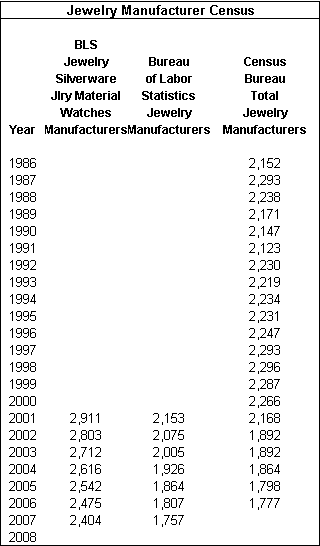
There are about 1,700 jewelry manufacturers in the U.S., according to census data from both the Bureau of Labor Statistics (BLS) and the Census Bureau. Unfortunately, this number has dropped recently, after holding relatively steady for nearly two decades.
From 1986, when business census records began conforming to modern day industry classifications, until 2002, the number of U.S. jewelry manufacturers held relatively steady at around 2,100. However, between 2002 and 2006 (the latest comparable government data), the number of U.S. jewelry manufacturers fell by nearly 20 percent to its current level of around 1,700.
There are an additional 700 manufacturing businesses that support the jewelry industry, including watchmakers and producers of jewelry materials (castings, for example), as well as producers of lapidary goods and related items. Like the number of jewelry manufacturers, the level of manufacturing support businesses has fallen almost 20 percent in the past few years.
Thus, the U.S. jewelry manufacturing industry, including supporting businesses, represents about 2,400 entities. The table below summarizes business census numbers since 1986 though the latest data (2007 for the BLS and 2006 for the Census Bureau).
Source: JBT, BLS, U.S. Census Bureau
Smallest & Largest Manufacturers Escape Consolidation
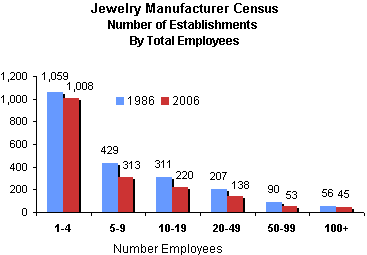
When jewelry manufacturers are analyzed by size – total number of employees – it is clear that the number of smaller producers and the number of very large producers have declined only modestly. However, for manufacturers with 5 to 100 employees, the ranks have thinned notably.
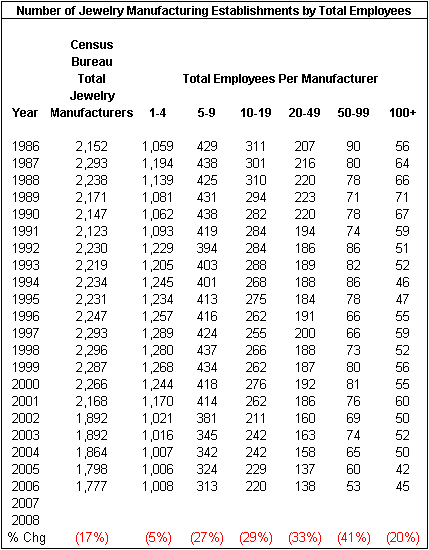
In 1986, there were just over 1,000 jewelry manufacturers with 1-to-4 employees; that’s about the same level as today. However, the number of manufacturers in this smallest group swelled by about 25 percent, hitting a peak of just under 1,300 in 1998, before beginning to diminish to today’s levels.
At the top end, the number of manufacturers seems to rise and fall like the ocean tide. Employment peaks were reached around 1990 and again around 2000. However, after each of these peaks, the number of very large producers fell.
The group with the largest decline includes manufacturers with 50-to-99 employees. The number of producers in this group has fallen by 62 percent since 1986. Apparently, this group has been hardest hit by consolidation. In contrast, very small manufacturers can be nimble and move with the market; very large manufacturers have economies of scale and can move markets themselves. Those manufacturers in between are caught, and they are the group with the largest losses over the past two decades.
The graph below illustrates the mix of size of manufacturers in 1986 versus 2006.
Source: U.S. Census Bureau
The table below summarizes the number of jewelry manufacturers by size since 1986.
Source: U.S. Census Bureau
Industry Employment Down
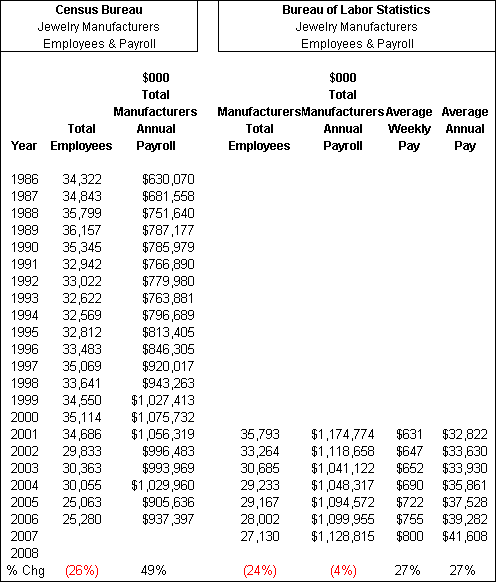
Along with fewer jewelry manufacturers, the number of employees engaged in jewelry manufacturing in the U.S. is also down. From about 1986 until 2002, the number of jewelry manufacturing employees remained fairly steady at 33,000 to 35,000 each year.
However, since 2002, the number of jewelry manufacturing employees in the U.S. has fallen by roughly 25 percent to about 26,000, based on both BLS and Census Bureau data.
While the number of employees has fallen, manufacturing payrolls have continued to rise sharply. Over the past 20 years, the industry payroll has risen by nearly 50 percent to just under $1 billion in annual wages. However, this long term trend had changed in the past few years. Since about 2001 or so, industry payrolls have remained about flat.
On a per worker basis, the average jewelry employee’s salary has risen by more than 25 percent in the current decade, both on a weekly pay basis and an annual basis.
The table below summarizes employment and payroll data for U.S. jewelry manufacturing employees.
Source: BLS, U.S. Census Bureau
Jewelers Board of Trade Data Differs
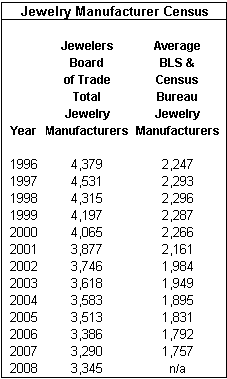
Normally, we like to have at least three sources to confirm our research data. There are three sources for the manufacturing census, but one source is substantially different from the other two. The Jewelers Board of Trade, which is the credit watch-dog of the industry, includes just over 3,300 manufacturers in its census, roughly double the number claimed by the Bureau of Labor Statistics and the Census Bureau.
We have reviewed the JBT data with it staff, and we have concluded that the U.S. government (BLS and Census Bureau) uses different definitions to describe manufacturers versus wholesalers. While JBT’s manufacturer census is roughly double the government census, its wholesale census is substantially less than the government census. When the wholesale and manufacturing census numbers are added together for both the JBT and the government, the numbers are much closer together. Overall, however, the JBT aggregate census of wholesalers and manufacturers is lower than the government census due to two key factors: 1) JBT counts a business entity as one, no matter how many physical facilities they have (the government counts each physical address); and 2) JBT does not claim to list 100 percent of the businesses involved in the jewelry industry in the U.S.
The following table illustrates the disparity between the JBT manufacturing census data and the average of the two government bureaus that track census information.
Source: JBT, BLS, U.S. Census Bureau
New Data Expected Late Summer
U.S. government data lags by up to two years or more, in some cases. We are expecting 2007 business census data to become available in August 2009. At that time, we will update these tables.