
IDEX Online Research: Targeting the Largest Consumer Jewelry Market Segments
June 07, 10
Logic would suggest that jewelers should target the market with the highest per-household spending on jewelry. If they followed that rule, they would miss out of some huge markets.
For example, while Asian households in
Focusing On the Largest Markets
The following is a summary of total jewelry expenditures – spending per household times the total number of households – for each of the major demographic factors that tracks with jewelry expenditures.
Income
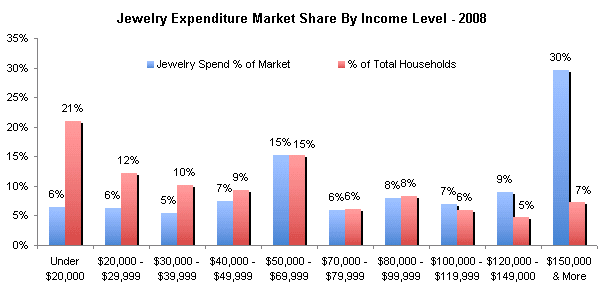
Consumers with incomes of $150,000 and above have by far the highest per-household expenditures on jewelry. They represent about 7 percent of the market. While this may seem to be a small group, they purchase a whopping 30 percent of all jewelry bought by American consumers, or about $18 billion. Jewelers who can reach this group should consider themselves to be very skilled . . . and perhaps lucky, too.
For most jewelers, the target market consists of consumers in the $50,000-100,000 income range whose aggregate expenditures represent about 30 percent of the total jewelry.
The graph below summarizes the aggregate size of the total spending by all households segmented by income levels.
Source: CES
Age
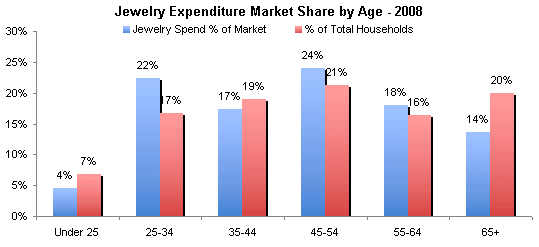
By age, the market for jewelry exists among younger consumers. Nearly a quarter of the jewelry market consists of consumers under age 35. Two-thirds of all jewelry expenditures in
Interestingly, households aged 25-to-34 do not have the highest income levels; their income is moderately below the national average. However, this age group buys more bridal jewelry – particularly big-ticket diamond engagement rings – than any other age group of American consumers. Further, their aggregate jewelry expenditures make them the second most-important age group among jewelry shoppers. Shoppers in the age group 45-to-54 have the highest income levels, and they represent the most important age group for jewelers, though not by a wide margin.
The graph below summarizes the aggregate size of the total spending by all households segmented by age.
Source: CES
Household Size
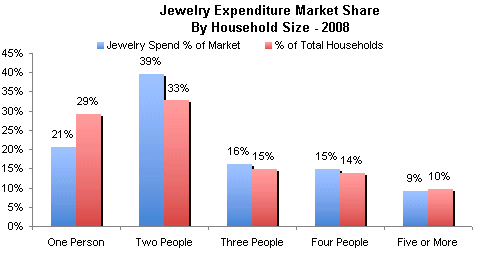
About one-third of all households consist of only two people, and their jewelry expenditures represent nearly 40 percent of the industry total, as the graph below illustrates. In two-person households, there is a high likelihood that both spouses work outside the home, and they have no child-related expenses. While two-person households do not have the highest per-household income levels (four-person households have the highest incomes), the average income level for a two-person household is above the national average.
Source: CES
Homeowners Vs Renters
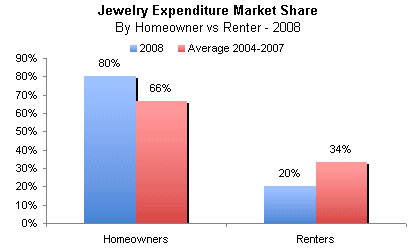
Roughly two-thirds of all American households own the home they live in. The aggregate jewelry expenditures by American homeowners represent 80 percent of total industry sales, as the graph below illustrates. American homeowners have higher income levels than renters.
Source: CES
Urban vs Suburban vs Rural
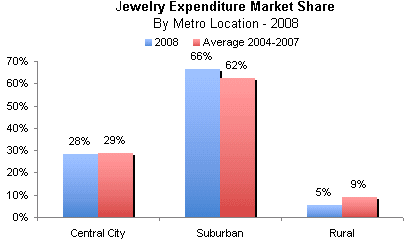
About 62 percent of all Americans live in a suburban location; their spending on jewelry represents two-thirds of the industry total revenues. Interestingly, center city consumers represent the next largest market. Suburban consumers have by far the highest per-household income levels, followed relatively closely by city center consumers. Rural consumers have relatively low per-household income levels.
The graph below summarizes the aggregate size of the total spending by all households segmented by location of residence.
Source: CES
Region of the Country
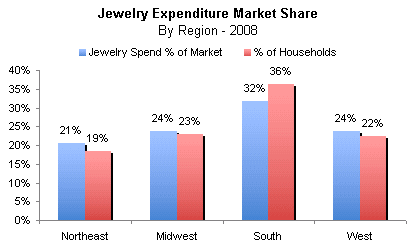
Southerners are the stingiest consumers: their jewelry expenditures per household are significantly lower than the national average. However, they represent the largest market of any geographic region in the
Source: CES
Consumers in the South have the lowest per-household income levels of any region of the
Ethnicity
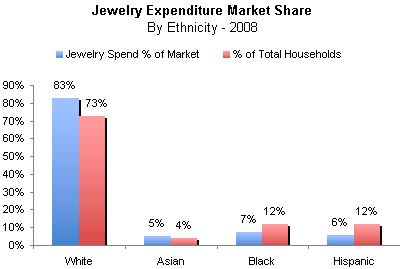
White consumers absolutely dominate the jewelry market, as the graph below illustrates. While Asian consumers may have higher jewelry expenditures per household, there just aren’t enough Asian households to support the jewelry market.
Source: CES
Education
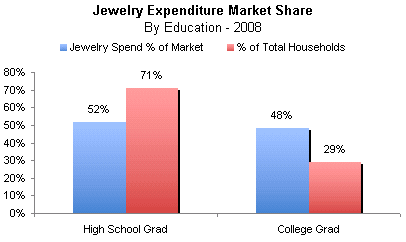
While less than 30 percent of all Americans have graduated from college, their spending represents about half of all jewelry market sales. This means that the jewelry market is split roughly evenly between college graduates and non-college graduates. College graduates earn about double the income of non-college graduates. While the market is split about 50/50, jewelers should concentrate on college graduates since they have the income levels to support increased jewelry spending.
Source: CES
Occupation
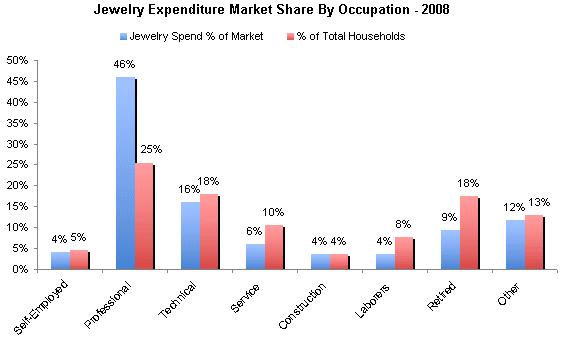
Jewelry spending by occupation correlates very closely to income levels for each occupation. Professionals typically make more money than laborers, and their jewelry expenditures reflect this disparity. Professional workers, who represent about one-quarter of the labor force, account for nearly half of all jewelry expenditures in the
Source: CES