
Euro-Zone Cranks Out Modest Growth
December 04, 06
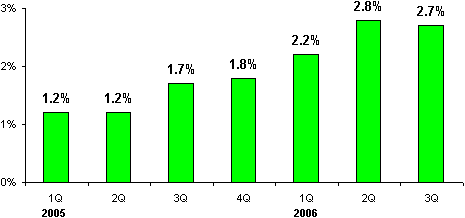
For an aging, mature economy, the Euro-Zone economy posted respectable growth of 2.7 percent in the third quarter ended September 2006. That’s a bit ahead of its long term potential, which is in the 2 percent range. However, most economists believe that the peak rate of Euro-Zone economic growth in the current cycle has already passed.
The Euro-Zone represents about 10 percent of total global jewelry demand, but its diamond demand is slightly higher – perhaps in the 12 percent range.
| Euro-Zone - Real GDP Growth Source: EuroStat |
Consumers Spend, Businesses Tighten
The two notable trends about Euro-Zone economic growth in the third quarter were an increase in final consumption (both public and private) and a decrease in fixed capital investment. Net trade was a modest drag on growth.
In the industrial economy, all sectors experienced a slowdown. Construction posted the largest slowdown, followed by agriculture, hunting, and fishing.
“Other services”, a catch-all category, showed continued gains, while growth slowed in the financial and business service sector.
The European Commission released its growth forecasts for the coming quarters. It appears that they believe economic growth will settle into a 2-2.5 percent annual rate, with a bias toward the upper end of this range.
IDEX Online Economic Growth Forecast More Pessimistic for Euro-Zone
IDEX Online Research believes that the economic growth estimates by the European Commission are far too optimistic. IDEX Online Research believes that the long term economic growth for the Euro-Zone is in the 1.5 percent-to-2 percent range annually.
Economic growth is roughly equal to a region’s population growth plus expected productivity increases. Productivity gains come from employees working harder, longer hours, or utilizing technology.
In
Further, due to its socialistic culture, Europeans are accustomed to many weeks of vacation, numerous national holidays, and cradle-to-grave government care.
If
Europeans still do not understand capitalism; until they do, their economy will continue to lag the rest of the world.