IDEX Online Research: Consumer Jewelry Expenditures – Jewelry’s Share of Wallet Dropped
October 08, 07
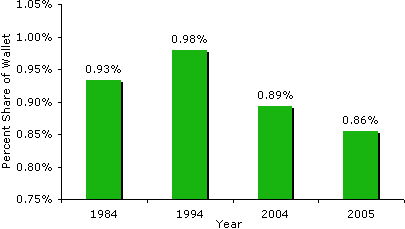
It probably comes as no surprise that jewelry’s share of wallet in the American market declined modestly in 2005. After all, energy prices soared, and American’s won’t give up their gas-guzzling SUVs for other discretionary purchases such as jewelry.
The graph below summarizes jewelry’s share of wallet for the typical household in the U.S. market during 2005.
U.S. - Jewelry Share of Wallet - 20-Year Trends
Source: BLS CES
What’s Up? What’s Down?
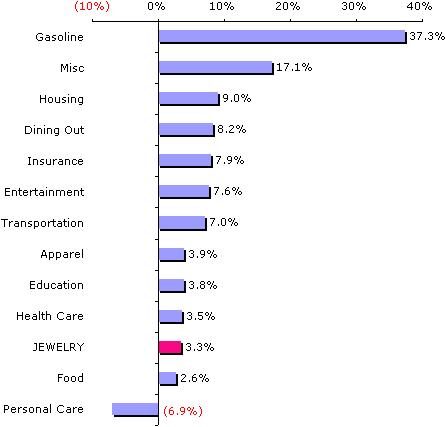
Even though jewelry lost a modest share of wallet among U.S. consumers in 2005, per-household jewelry spending rose by 3.3 percent, according to the Bureau of Labor Statistics Consumer Expenditure Survey. That’s the good news.
The bad news is that consumers’ expenditures for other categories rose substantially more than their spending on jewelry. Perhaps this is to be expected: jewelry is a discretionary purchase, and spending for a new diamond ring comes after the gasoline bill and house payment have been made.
The following graph illustrates which major consumer expenditure categories are up, on a year-over-year basis, and which are down. The graph compares 2005 results with 2004 data.
| Changes in Consumer Spending by Category |
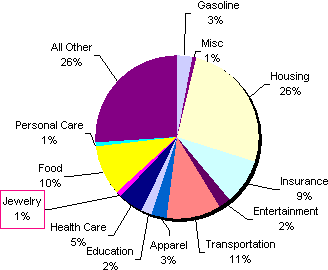
The following graph summarizes the share of wallet – the relative importance – of each major spending category. In the prior graph, the “miscellaneous” category showed a sharp increase in expenditures, but as the graph below illustrates, “miscellaneous” is only 1 percent of total consumer share of wallet.
| Share of Wallet - 2005 |