
IDEX Online Research: Expenditures by Occupation –Color of the Collar Doesn’t Matter
July 28, 08
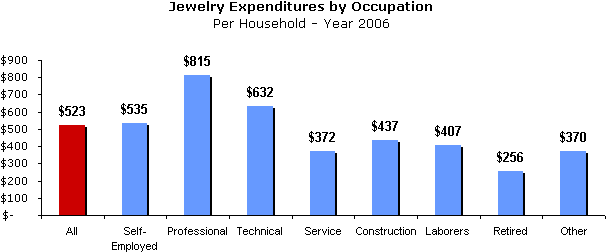
There is little correlation between white-collar workers’ spending on jewelry versus blue-collar workers’ jewelry expenditures. Whether the collar is white or blue, the greatest correlation is between the annual income level of various workers and their annual spending on jewelry. Once again, it is all about money: those who work in high-income occupations spend much more heavily on jewelry than their less well-paid counterparts.
The lesson for jewelers: if they come into your store in bib overalls or pin-stripe suits, they could be ready, willing and able to spend lots on jewelry. Don’t judge a shopper by the color of his collar.
The graph below summarizes jewelry expenditures by household for various professions for the year 2006.
 Source: CES |
On a year-to-year basis, the results for 2006 were not very different from the results for 2005 and prior years.
Income Explains Spending Differences
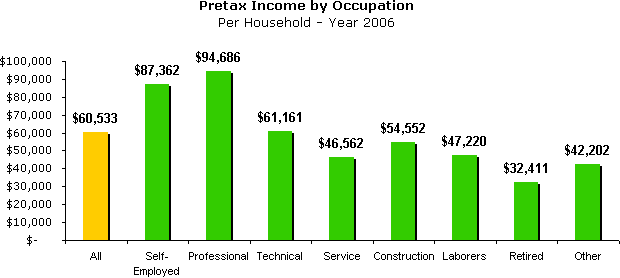
It all comes down to money: those with the money spend it on jewelry. The following graph summarizes pretax income for each profession listed on the graph above. The correlation between income, profession and jewelry spending is clear.
Source: CES
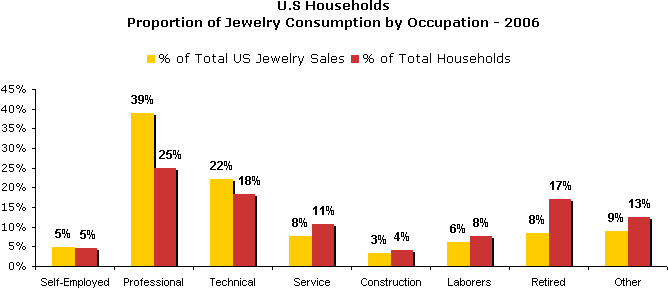
Even more striking is the proportion of aggregate spending by each profession. For example, roughly one-fourth of all American households are headed by a “professional” manager; these households account for nearly 40 percent of the total jewelry expenditures in the U.S.
The graph below summarizes the relationship between the total households in the U.S. and their aggregate spending power.
Source: CES