
Trump Introduces Third Round of Tariffs
July 26, 26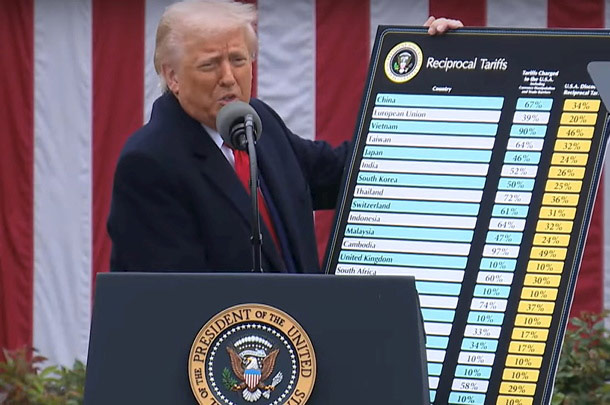
)IDEX Online) - The Trump administration has announced a new set of tariffs that will add either 10% or 12.5% to the cost of jewelry, diamonds and gemstones imported into the United States, depending on the country of origin.
The new strategy uses different legislation - after an earlier set of tariffs was struck down by the Supreme Court - and is being framed as a move against countries that allow goods to be manufactured using forced labor.
The measures were announced on 23 July 2026, and took effect the following day. They apply to imports from around 60 countries, including major suppliers such as India, China and other key jewelry‑sourcing hubs.
The result is an increasingly complex patchwork of tariffs legislation, with different legal tests and exemption lists, which can be partially replaced or re‑written, even after tariffs have been withdrawn.
Trump first announced broad IEEPA tariffs (International Emergency Economic Powers Act) in April 2025 under a law that lets the president declare an emergency and respond to "threats from abroad".
In February 2026 the Supreme Court ruled he'd exceeded his authority in using legislation to impose them. He responded with a 10% stop‑gap global tariff on most imports, known as the Section 122 surcharge that was legally capped at 150 days.
Five months on, that has now expired and he has replaced it with a country‑by‑country system under Section 301 of the 1974 Trade Act.
The Office of the United States Trade Representative (USTR) said the move would "begin to correct what is both a human rights abuse and distortive trade practice to improve the welfare of workers everywhere," and followed two rounds of public hearings aimed at remedying "these longstanding concerns".
The new tariffs are permanent. They mean 10% additional duty on Indian exports of both natural and lab grown diamonds, colored gemstones, and jewelry.
China, Hong Kong, Thailand, Turkiye, the UAE, Israel, and Vietnam all face a 12.5% tariff, but natural diamonds cut in the European Union are explicitly listed for exemption, so they do not pay the new surcharge when entering the US as loose stones.
Pic shows US president Donald Trump announcing reciprocal tariffs last April.