
Richemont Jewelry Sales up 19% in H1
November 15, 26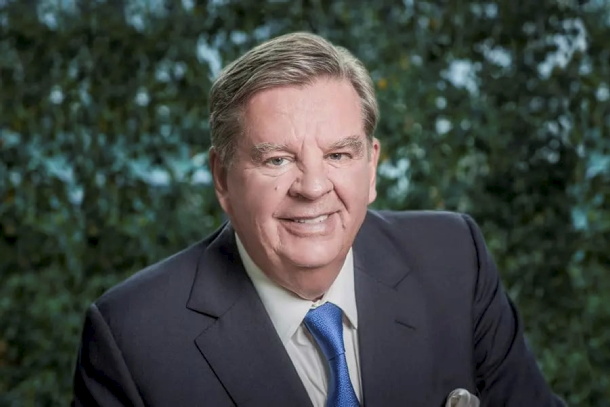
(IDEX Online) - Richemont reported a 19% increase in jewelry sales at constant exchange rates in the first half, helping drive a 16% rise in group revenue to EUR 12.28 billion ($13.58 billion).
The Swiss luxury group, which owns Cartier, Van Cleef & Arpels, Buccellati and Vhernier, reported jewelry sales of EUR 9.1 billion, an 18% increase when calculated at actual exchange rates.
Operating profit increased 33% to EUR 3.13 billion ($3.46 billion), while net profit rose 39% to EUR 2.53 billion ($2.80 billion).
The results, announced November 13, showed continued strength in demand for high-end jewelry despite elevated raw material costs and an uncertain geopolitical and economic environment.
Group sales increased 17% at constant exchange rates, with second-quarter growth of 13%, following a particularly strong first quarter when sales rose 20%.
Jewelry sales increased 18% at actual exchange rates, with second-quarter growth of 14% at constant exchange rates.
Chairman Johann Rupert (pictured) said: "The Group delivered a strong first half, carried by the sustained excellent performance of our Jewellery Maisons, robust growth at our Specialist Watchmakers, and solid momentum at our Fashion & Accessories Maisons."
The group's specialist watchmakers also recorded growth, with first-half sales increasing 9% to EUR 1.7 billion ($1.88 billion). At constant exchange rates, the increase was 10%.
Performance varied between markets. Asia Pacific sales increased 16%, while Japan recorded growth of 30%. The Americas also performed strongly, with sales up 23%.
Sales in Europe increased 13%, while the Middle East and Africa recorded a 2% decline, reflecting the impact of the ongoing regional conflict.
Richemont's gross margin increased to 66.5% from 65.3%. However, the improvement included EUR 229 million in positive one-time tariff-related items. Excluding those benefits, the gross margin declined by 70 basis points, reflecting higher production costs, particularly for gold.
Rupert said the company expected economic and geopolitical conditions to remain uncertain.
"Whilst we cannot predict what lies ahead, we expect the macroeconomic and geopolitical environment to remain volatile for the foreseeable future," he said.
The results underline the continuing strength of high-end jewelry, even as the broader luxury industry faces uneven consumer demand and rising production costs.