
IDEX Online Research: Jewelry Price Inflation Moderates in February
March 24, 10
Jewelry price inflation pressures continued to subside somewhat in February, after rising late last year. Near the end of 2009, IDEX Online Research believes that inflation flared due to some price speculation as jewelry suppliers tested the possibility that jewelry retailers would be forced to re-order goods for shelves that were bare after a stronger-than-expected holiday selling season.
However, three factors have helped cool the flames of inflation: 1) most jewelry commodity prices – especially gold and silver – have remained stable; 2) seasonal demand related to Valentine’s and Mother’s Day has not been as strong as some suppliers and retailers had hoped; and 3) jewelry currencies remain relatively stable.
February 2010 Jewelry Price Inflation Continues to Moderate
The key jewelry industry inflation statistics for February 2010 are as follows:
· Jewelry Producer Price Index (JPPI) = +6.7 percent
· Jewelry Consumer Price Index (JCPI) = (0.4 percent)
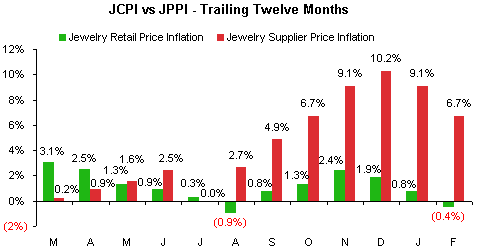
Source: BLS
Outlook: Inflation Won’t Go Away
While inflation appears to be cooling somewhat, we believe that this is a temporary situation. Minor cycles like this often occur as the global economy exits a recession. Markets are tested for the inflation tolerance. In the case of the jewelry industry, suppliers tried to push prices higher – as shown on the graph above (red bars), but retailers did not take the bait. They held prices firm at retail (green bars) and refused to re-order goods that suppliers had marked with higher prices.
Longer term, however, as the global economy heats up, there will be increasing demand for “hard assets” – specifically commodities such as gold, platinum, silver, palladium and diamonds – from both investors as well as end users in other industries. All of those commodities are major cost components of jewelry.
In addition, prices for polished diamonds are rising, after remaining about flat for most of 2009. It is unlikely that jewelers will re-price diamond jewelry that they own in their inventory, but new incoming diamond merchandise will carry higher retail prices because of the increased cost of polished diamonds.
Retailers are faced with a major dilemma: consumers are seeking a value – better quality goods for a low price – but they are also seeking low price-point merchandise. The quality of merchandise at the “hot” $99 retail price point has deteriorated, and will continue to decline until it becomes junk jewelry. Somehow, consumers will need to be re-educated: you can’t have something for nothing.
For more detailed analysis and statistics on jewelry industry inflation for February 2010, please click here.