IDEX Online Research: Gold Bridal Jewelry A Golden Opportunity for Jewelers
July 03, 07
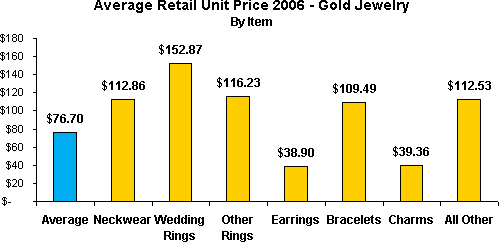
Here’s one more reason to target the bridal market in the U.S.: the biggest ticket gold jewelry item has been – and continues to be – wedding rings. The typical gold wedding band sold for just over $150 in 2006 in the American market, about double the average retail price for all categories of gold jewelry.
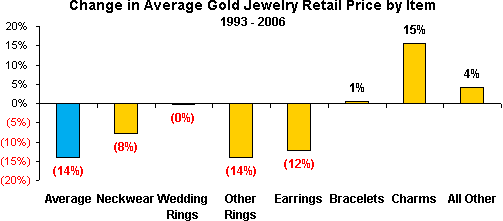
The better news is this: while the average ticket for gold jewelry had declined by about 12 percent since 1993, the average ticket for a wedding band has held about steady during that period.
These statistics are no surprise, since the wedding business has been strong in the U.S. The number of couples getting married each year has been creeping up, and it is ready to rise sharply over the next decade. Thus, jewelers have an opportunity to expand their gold wedding jewelry business.
The graph below illustrates the average ticket for various categories of gold jewelry.
|
The average retail price of gold jewelry neckwear in 2006 was $112.86 |
Average Ticket Trends Vary Widely
While the average ticket for a piece of gold jewelry has fallen by 12 percent since 1993 from $86.99 to $76.70, some categories of gold jewelry have experienced a substantial decline in the average ticket while others have been stable. On a percentage change basis, gold charms have seen the largest gain of any gold jewelry category, but the average ticket for a gold charm is only $39, or about half of the average ticket of all gold jewelry. Further, they represent only 13 percent of the total pieces of gold jewelry sold in a year and only a modest 6 percent of total retail revenues.
In other words, this category – charms – is nothing to get excited about. Further, with the softening in popularity of Italian charms, we expect that sales of gold charms could flatten or even decline this year.
Almost every other gold jewelry category has experienced a flat or declining average ticket.
The graph below illustrates the price change in a piece of gold jewelry between 1993 and 2006.
|
The average retail price of gold jewelry declined by 154% from 1993 to 2006 |
Great Potential for Gold Wedding Jewelry
With an average ticket of about $153, wedding rings have shown stable retail price trends. In terms of total unit sales, they represent less than 4 percent of all gold jewelry sold, but revenues from wedding bands represents just over 7 percent of all retail gold jewelry revenues.
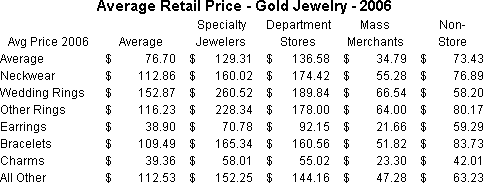
For specialty jewelers, the wedding band business is even better. The average ticket for a gold wedding band at typical specialty jeweler in America is about $261 (see table at end of article), almost double the overall average ticket for gold wedding bands.
Based on the average ticket of $261 and average annual sales of 111 weddings bands per specialty jeweler in America, the typical jeweler generates about 3 percent of annual store sales from this product category. This is a profitable add-on business to the diamond engagement ring business; further, it enhances the jeweler’s ability to leverage the bride’s demand for jewelry as a gift for her bridesmaids.
IDEX Online Research is projecting that the number of weddings in the U.S. could rise by as much as 30 percent over the next decade versus the average of the past ten years. Most of this increase is being fueled by demographic changes, including a sharply higher number of Millennials who were born between 1979 and 1994.
Assuming that the typical age for marriage holds – about age 26-28 – it is inevitable that the total annual number of weddings will rise sharply. Further, today’s twenty-somethings seem to believe in the institution of marriage more than their predecessors. Unfortunately for jewelers, the divorce rate is declining, so there will be fewer second and subsequent weddings; typically, second-time weddings mean larger diamond engagement rings.
The graph below illustrates the current forecast for the number of weddings in the U.S. market over the next two decades.
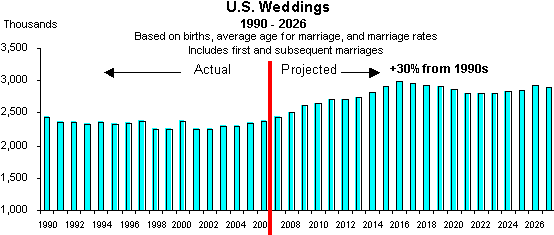
Source: Census Bureau, Center for Health Statistics
Gold Jewelry Price-Points Vary Widely by Retail Channel
IDEX Online Research believes it is important for gold jewelry suppliers, especially those located in overseas markets, to understand the dynamics of gold jewelry pricing at retail. While some of the trends may not be favorable for gold jewelry fabricators and suppliers – such as the decline in the average ticket for gold jewelry – they reflect the realities of the market.
The table below summarizes the average gold jewelry price point 1) by merchant, and 2) by item for 2006. Here’s what is important for gold jewelry suppliers: the prices shown by item by merchant reflect retail prices, including the retailers’ profit. Historically, gold jewelry has generated a modestly above-average gross margin – just over 50 percent. Thus, the typical piece of gold jewelry that is selling for $76.70 at retail should have a landed cost of about $38.
With the current environment of high (and rising) gold prices coupled with American’s refusal to pay more than about $75 (retail) for a piece of gold jewelry, regardless of the gold content, suppliers must be able to keep costs in line with market demand, if they plan to maintain market share.
In addition, the World Gold Council (WGC) continues to promote gold jewelry in an effort to create demand.
Understanding the dynamics of gold jewelry demand is complex, but the table below is a first step to untangling how the market works.
|
|